


The Future of Home Healthcare: Key Trends in Home Care Nursing Services for 2026

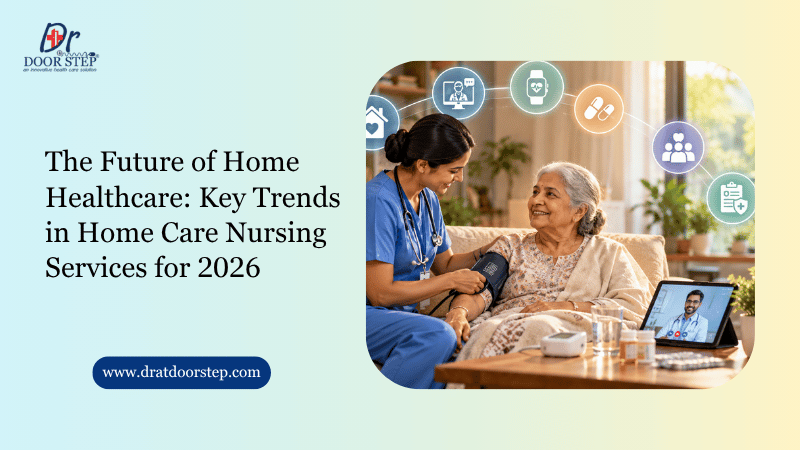
Think about how your family handled a hospital discharge a few years ago. Chances are, someone took leave from work, a relative stayed up nights, and everyone hoped they were doing the dressings right.
This is slowly changing. Across India, more families are asking for nursing, monitoring and recovery help at home. Home care nursing services are also getting smarter. Portable devices, connected apps and digital records are now part of everyday care.
Let’s see the future of home health care and the trends in home care nursing services in 2026.
What Are Home Care Nursing Services?
Put simply, home care nursing services mean a trained nurse looks after a patient at home instead of in a hospital.
Depending on the need, the nurse may help with:
- Medicines and injections
- Wound dressing
- Vital sign checks
- Post-surgery care
- Recovery support
The real benefit is continuity. Patients don’t need to travel for routine care. They heal in a familiar room, with their own people around them. For an elderly parent, that comfort often matters as much as the treatment itself.
5 Trends Shaping Home Healthcare in 2026
1. Portable Diagnostics Are Moving Into Homes
One of the clearest trends in home healthcare 2026 is the rise of portable diagnostics at home. Tests that once meant a trip to a lab can now be done at the bedside.
A nurse can carry compact devices to check:
- Blood pressure
- Blood sugar
- Oxygen levels
- Body temperature
- Heart rate
Picture a nurse visiting a patient in Ahmedabad or Bengaluru. She takes the readings, notes them down, and sends them to the treating doctor the same day. No queue, no long drive, no tired patient.
One honest point, though. These devices support a doctor’s judgement. They don’t replace it.
2. Smart Technology Is Supporting Nurses
Smart home nursing technology sounds like something from a film, but most of it is quite simple. Nurses can now log observations, track medicine schedules and store patient details digitally.
For families, this brings clarity. You can see what was done, when, and what changed. For nurses, it cuts paperwork.
The goal isn’t to make care cold. Less time spent on files means more time spent with the patient. That is a good trade.
3. Digital Health Monitoring Is Becoming More Common
India’s digital health ecosystem is growing fast, and it is changing how patients and doctors stay in touch. Digital health monitoring India now includes wearables and connected tools that track heart rate, activity, oxygen levels and, in some cases, glucose.
Take an elderly person with diabetes living in Pune. Selected readings can be tracked at home, while the family is in another city and the care team stays informed.
But a number on a screen is not a diagnosis. An odd reading needs a professional to interpret it, and a “normal” reading doesn’t cancel out real symptoms.
4. Home Care Is Becoming More Personalised
No two patients need the same care. Someone recovering from knee surgery may need a few weeks of support. Someone with a long-term illness may need regular visits for years.
Care plans in 2026 will be structured according to:
- Medical diagnosis
- Age and mobility
- Stage of recovery
- Pharmacologic needs
- Support from the family
In this way, families can save money on unnecessary services and cover what really matters.
5. Preventive Care Is Gaining Importance
Home health care has become more than just solving existing health issues; it can now detect small shifts through continuous monitoring.
For older adults, keeping an eye on blood pressure, sugar, diet, mobility and medicine routines can show families when it’s time to call the doctor. This matters a lot in Indian households where children often work in a different city from their parents.
Why Are More Indians Considering Home Healthcare?
A few simple reasons keep coming up.
There is an increase in India’s elderly population. Diabetes and hypertension are two chronic diseases that require ongoing treatment. And for people with limited mobility, even a routine hospital trip can be exhausting.
Families usually mention these benefits:
- More comfort and privacy
- Less travel
- Easier post-surgery recovery
- Familiar surroundings
- Family stays involved
Think about someone discharged from a hospital in Mumbai or Chennai. The first week at home can feel scary. Having a qualified nurse there, who knows what to watch for, makes that move far less stressful.
Practical Tips for Choosing Home Nursing Support
Technology is a useful tool, yet it is the individuals who matter most in delivering quality care. The following five items need your consideration before you hire a nurse for home care service:
- Nurse qualifications: Enquire about training, experience and other similar cases managed by the nurse.
- Care requirements: Make clear to the nurse the condition of the patient.
- Communication: Know how the nurse would keep the doctor and family informed of developments.
- Emergency planning: Plan in case anything goes wrong.
- Data privacy: Be informed about how health information is kept secure and confidential.
Don’t pick a provider just because they use the latest gadgets. Good care comes from qualified people, sensible technology and proper medical supervision working together.
Common Mistakes to Avoid
It’s easy to expect too much from home healthcare tools. That can lead to real trouble.
Watch out for these:
- Treating wearable readings as diagnoses
- Hiring untrained helpers for nursing tasks
- Ignoring symptoms because devices look normal
- Hiding medical history from the care team
- Delaying hospital care in emergencies
Home care should work alongside medical treatment. When a situation is serious, the hospital is still the right place.
FAQs
What are home care nursing services?
They are professional nursing services given at the patient’s home. Depending on the need, they may include wound care, medication support, injections, vital checks and care after surgery.
What are the major trends in home healthcare 2026?
The main ones are portable diagnostics, connected monitoring devices, smart nursing tools, digital health records and more personalised care plans.
Can portable diagnostics replace a doctor’s visit?
No. Portable tests provide valuable data, yet cannot replace a doctor’s diagnosis and clinical test.
Is digital health monitoring helpful for elderly people?
It is if it is done correctly. Regular monitoring may help to notice certain changes in patients who have chronic diseases.
How should I select a home nursing service in India?
Choose a skilled nurse, appropriate experience, good communication skills, medical supervision, and a care plan. Make sure that the service fits your needs.
Conclusion
Future possibilities for home care nursing services in India will depend on the interplay of these three factors: skilled manpower, improved technologies, and patient-specific care. Advanced portable diagnostic devices, intelligent devices, and digital surveillance may make home healthcare is more advanced and convenient. Still, a doctor’s judgement and a nurse’s experience remain at the heart of it.
If you are planning care for a parent, spouse or recovering family member, DrAtDoorstep can help you understand your options and arrange professional support at home. Explore the services available and choose what suits your patient’s needs.

The Rise of Doorstep Medicine Delivery.
Today life is becoming very rapid indeed. With office deadlines, school pick-ups, traffic congestion, and household commitments, going to the.
Read More
The Importance of Ambulance Services in.
Ambulance services are a reliable human invention that serve as emergency vehicles. This service helps patients stay stable throughout vital.
Read More
