
The Economic Impact of a Strong Healthcare Delivery System in India

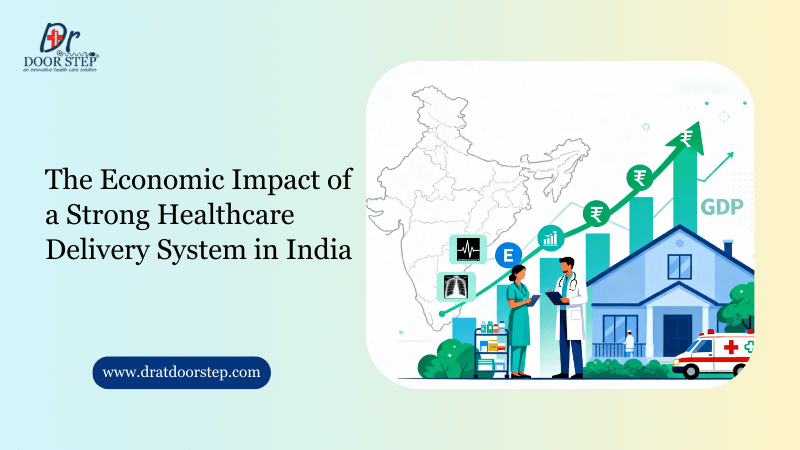
Can good health lead to economic growth? In India, the answer is a loud yes. The improved healthcare delivery system in India does much more than treat illness. It is also very helpful in keeping the society productive, facilitating families escaping financial crises, and providing jobs in various sectors across hospitals, diagnostics, pharmaceuticals, and digital health.
Let us explain the whole thing in a very simple way and with the help of actual figures.
Healthcare is becoming a core part of India’s economy.
Healthcare is a major sector in the economy now, and it is just one of the growth drivers.
- According to the India Brand Equity Foundation, India’s healthcare market was valued at approximately ₹31.9 lakh crore (US$372 billion) in 2023. By 2025- 2026, it is expected to grow to around ₹54.7 lakh crore (US$638 billion).
- The proportion of healthcare expenditure to GDP was around 3.3% in India in 2022 and is projected to go up to nearly 5% by the year 2030.
This increase in share signals two things. One, the demand for medical care is increasing with the rise in disposable income and lifestyle changes. The second is that health policymakers have started to view health as an economic investment rather than just a social cost.
A robust healthcare delivery system in India translates into investments in hospitals, technology, training, and supply chains. This spending has a multiplier effect on the wider economy.
Jobs, skills, and livelihoods
Healthcare is one of India’s biggest job creators.
In 2015, the sector had already ranked as the fifth-largest employer, with a total of 4.7 million people being engaged directly in healthcare.
Jobs are not only for physicians and nurses. The entire healthcare system requires paramedics, lab technicians, nurses, IT professionals, medical equipment engineers, ambulance staff, and others.
Every new hospital, diagnostics center, or home-care network helps local people earn their living. It also attracts more young people towards the healthcare sector, increasing access and the quality of care.
Infrastructure expansion and private investment
India has a pressing need for more hospital beds, intensive care units, and specialized care that would benefit mainly the underdeveloped regions or rural areas. Nevertheless, the conditions are beginning to shift in a positive direction gradually.
In the financial year 2026, private hospitals are likely to bring in more than 4,000 beds with an approximate investment of ₹11,500 crore.
The big players are enlarging their operations, and the specialty hospitals are penetrating Tier-2 and Tier-3 cities to satiate the increasing demand.
With each bed added, there will be:
- Construction employment during the building phase
- One job offered to the local community once the facility opens
- Neighborhood activity in the areas of pharmacy, food service, transport, and housing
Strengthening hospitals and clinics is a great health outcome and regional economic development.
Productivity gains from healthier citizens
One of the obvious things about health is that people are more productive and get paid more. The effect of such practice at the national level is gigantic.
An efficient Healthcare Delivery System in India:
- Identifies diseases at an early stage through the provision of primary care and screening
- Management of chronic diseases such as diabetes and hypertension
- Preventable illnesses lead to a less number of days away from work
- Helps a lot in avoiding sudden health shocks that result in people’s removal from the workforce
The overall good health of the population makes it possible for children to learn better, women to participate more actively in the labor market, and small businesses and gig workers to remain active. It also directly contributes to the GDP growth over time.
Protecting families from financial hazards
Among the various economic hazards that Indian families face, unexpectedly high medical bills stand out as the major one. In turn, they resort to either gradually exhausting their savings or acquiring loans with exorbitant interest rates.
Policy and delivery changes are slowly reducing this risk:
- Government schemes such as Ayushman Bharat have made insurance coverage more extensive, and total health insurance coverage was about 40% in 2023.
- The private sector has already taken care of nearly 70% of patients and over 60% of the infrastructure, so their integration into the national health plans seems critical.
A stronger delivery system that unites government hospitals, private hospitals, and home-care models can do the following:
- Reduce out-of-pocket spending
- Share risk via insurance
- Keep families financially more secure
Once fewer households fall below the poverty line due to medical costs, the economy as a whole becomes more resilient.
Digital and doorstep care: the new front line
Healthcare is already beyond hospital walls. Telemedicine, e-pharmacies, remote monitoring, and home visits are now key parts of the Healthcare Delivery System in India and beyond.
This shift has clear economic benefits:
- Reduces travel time and wage loss for patients
- Decongests hospitals by moving routine follow-ups and chronic care to homes
- Makes healthcare more accessible for elders and people with mobility challenges
- Creates new types of jobs in health tech and home-based care
Doorstep services bridge the gap between formal healthcare and daily life. They support early intervention and better adherence to treatment, which improves outcomes and lowers long-term costs.
Why does this matter to you as a citizen
When you zoom out, a strong health system means:
- Higher likelihood of getting treated well just around your residence
- Fewer unexpected medical bills due to sickness
- More employment prospects in a booming sector
- Generally, a more stable and productive economy
However, it is also reflected in your daily life. Waiting times have been reduced. Doctors have become more accessible. More options are now available that fit your schedule and your budget.
Final Note
India perceives healthcare not only as a support service but also as a strategic growing sector. A more potent Healthcare Delivery System in India underpins GDP, jobs, innovation, and household stability simultaneously.
At Dr. at Doorstep, we hold the view that bringing quality care right next to where people live is the next move in this journey. Home visits, monitoring, and consultations at your place do away with obstacles and keep you healthier through timely care.
Dr. at Doorstep is one step forward, providing healthcare at your convenience so that you can enjoy the economic and personal advantages of a healthier system without even leaving your house.

Everything you wanted to know about.
It is impossible to undervalue the significance of routine blood testing in the context of health prevention. The Complete Blood.
Read More
How to Choose the Best Home.
When receiving medical care, your loved ones want to feel secure and at ease. Many families today choose home health.
Read More
